
TSMC Pivot: 3nm Logic Chips to Replace 6nm Plans at Second Japan Fab
Feb 6, 2026 — In a major strategic realignment, Taiwan Semiconductor Manufacturing Co. (TSMC) has confirmed it will shift the production focus of its second Japanese manufacturing facility from 6nm nodes to advanced 3nm process technology.
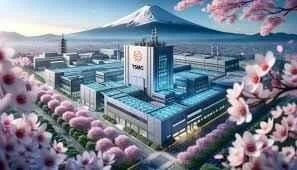
Image generated by AI
The decision follows a high-level meeting between TSMC CEO C.C. Wei and Japanese Prime Minister Sanae Takaichi, where the move was hailed as a "triumph" for Japan’s economic security and goal of becoming a global AI hub.
Strategic Shift to Advanced Nodes.
While the second Kumamoto fab (operated under the JASM joint venture) was originally slated for 6nm and 7nm production, a decline in demand for automotive-grade legacy chips and a massive spike in Artificial Intelligence (AI) and High-Performance Computing (HPC) requirements triggered the upgrade.
Production Targets: The fab will now produce 3nm chips—the current industry benchmark for power efficiency and performance—used in high-end smartphones, data center GPUs, and autonomous driving systems.
Timeline: Despite the technology shift, construction remains on track. Operations are expected to commence in late 2027.
Economic and Financial Impact
The upgrade significantly increases the scale of the project:
Increased Investment: Total capital expenditure for the second fab has risen to approximately $17 billion (¥2.6 trillion), up from the initial $12.2 billion estimate.
Government Subsidies: The Japanese Ministry of Economy, Trade and Industry (METI) is reportedly evaluating additional financial support beyond the ¥732 billion already committed, viewing the 3nm capability as vital to Japan’s "Silicon Renaissance".
Global Footprint and the "Taiwan-Centric" Model
Industry analysts at TrendForce note that this move will push TSMC's overseas capacity to nearly 20% of its total output by 2028. However, the company maintains that its most cutting-edge research and "next-generation" nodes (such as 2nm and beyond) will remain concentrated in Taiwan to ensure domestic technological leadership.
Sources: Taipei times, Focus Taiwan and CommonWeath Magazine.